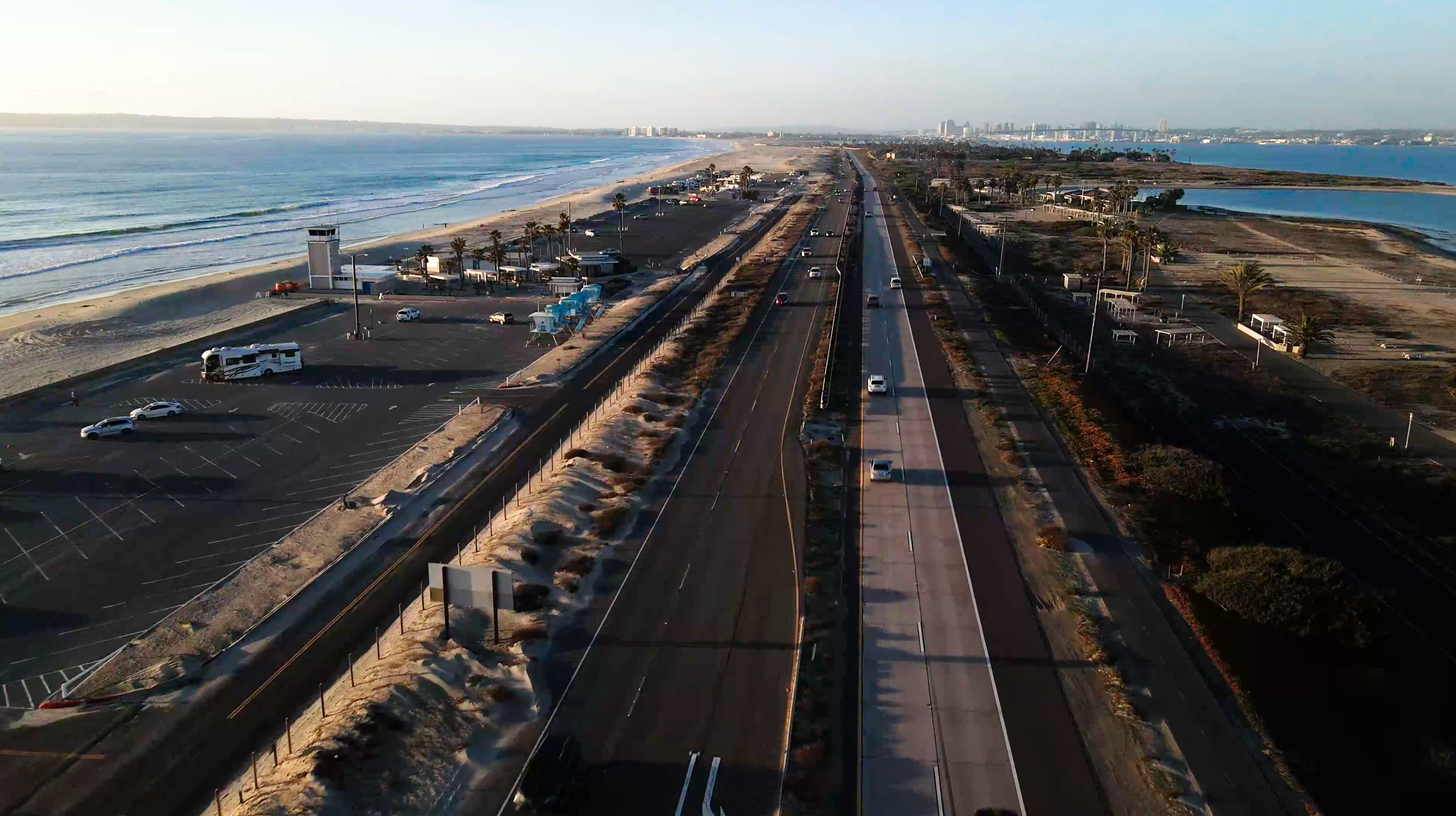
San Diego County supervisors voted 4-1 on Tuesday, Sept. 1, to spend $5.8 million on two projects aimed at intercepting Tijuana River sewage reaching Coronado-area beaches.
The funding marks the first time the county has committed its own money to capture and treat contaminated river flows rather than waiting on federal agencies or Mexico.
Of the $5.8 million, $1.8 million will fund engineering for a sewage capture and cleanup system along the Tijuana River, the Coronado Times reported. The remaining $4 million covers design, environmental review and permitting to replace failing box culverts beneath Saturn Boulevard.
At Saturn Boulevard, a UC San Diego team found hydrogen sulfide levels 4,500 times higher than typical for an urban area, according to NBC San Diego. The board voted unanimously on the culvert replacement.
The board letter also converts the county's ad hoc Tijuana River subcommittee into a standing committee to maintain public accountability as the effort moves forward.
Supervisor Paloma Aguirre co-led the initiative with Board Chair Terra Lawson-Remer. They called it the "Tijuana River Capture and Cleanup Initiative," a three-phase effort spanning roughly 18 months of engineering, site permitting and financing work.
"The South Bay has heard 60 years of promises," Aguirre said at a Monday, Aug. 31, news conference. "This one comes with a budget."
Supervisor Joel Anderson cast the lone dissenting vote. He said the county should not act alone and that a coalition could better handle the project's costs. Supervisor Jim Desmond voted yes but said he would like to see Mexico address the problem, adding the county should "at least plan for the worst-case scenario."
The crisis has hit Coronado directly. Some regional beaches have been closed for more than 1,400 consecutive days, though that figure applies to Imperial Beach specifically.
A Department of Defense Inspector General report released in early 2025 found that between January 2019 and May 2023, the Naval Special Warfare Center in Coronado diagnosed 1,168 cases of acute gastrointestinal illness among trainees. About 39% fell ill within seven days of training in water exceeding state bacteria standards. From February to September 2024, 75% of water quality tests at the training area failed those same standards.
The International Boundary and Water Commission (IBWC) currently treats wastewater piped from Tijuana but does not treat water entering the U.S. through the Tijuana River itself. Approximately 50 million gallons flow into the river daily, a portion of which is raw sewage, according to SOF News citing the California State Lands Commission.
Lawson-Remer said the county's long-term plan could involve bonding against roughly $80 million a year in guaranteed revenue to raise close to $1 billion for treatment infrastructure. A countywide ballot measure, Measure B, on the November 2026 ballot would raise the county sales tax by half a percent. Supporters project it would generate about $360 million a year, with 22% dedicated to Tijuana River solutions. Both supervisors said they were not taking a position on the measure.
County staff will evaluate options including diverting river flows, expanding the South Bay International Wastewater Treatment Plant, retrofitting other infrastructure or building a new treatment plant. A $2.5 million interim pipe extension at Saturn Boulevard is already underway, with completion expected in 2027.