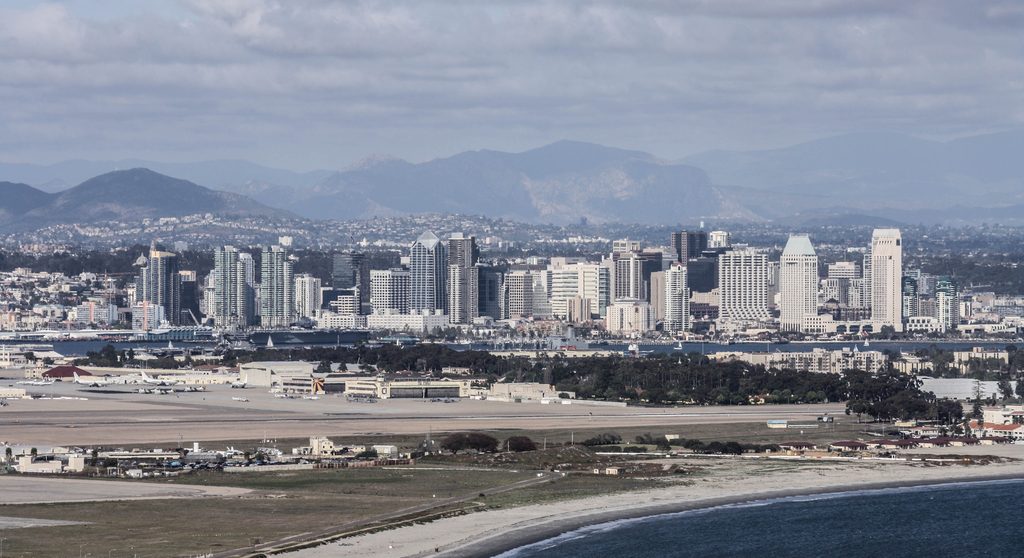
Coronado has hit its legal limit of ten formula fast food restaurants, according to the Coronado Eagle & Journal. No new chain can open anywhere in the city until an existing one closes or leaves.
The cap is one of two formula business ordinances the city adopted in December 2000 to control chain proliferation in its commercial districts. Reporter Brooke Clifford detailed the rules in a Sept. 10 explainer for the Eagle & Journal.
Under the city's municipal code, a "formula fast food restaurant" is any fast food operation sharing a trademark, logo or menu with 15 or more locations. The code caps those restaurants at ten sites citywide and bars new ones from street corners unless the prior tenant was also a chain fast food restaurant.
Two chain fast food brands cannot share a single site under the ordinance. The KFC and Taco Bell that share a Coronado location were grandfathered in because they predated the 2000 rules.
The cap is full.
Any chain fast food operator seeking a Coronado location must obtain a minor special use permit. The Coronado Planning and Design Commission reviews each application and must find the restaurant will not harm surrounding land uses, pedestrian or vehicle traffic, or public welfare.
Chain retailers face frontage and design limits
A separate ordinance targets formula retail businesses. Under CMC Section 86.55.370, any chain sharing a trademark with 15 or more locations cannot occupy more than 50 linear feet of street-level frontage or more than two stories. Grocery stores, banks, savings and loans, full-service restaurants and theaters are exempt from those size limits.
Chain retailers must also pass a design review. The commission weighs whether a proposed store fits the existing mix of local, regional and national businesses and whether it preserves the community's commercial character.
For minor special use permits, the Planning and Design Commission makes the final call, though applicants can appeal to the Coronado City Council. For major permits, the commission recommends and the council decides.
Court upheld ordinances in 2003
Property owners challenged the ordinances shortly after they took effect, arguing they discriminated against out-of-state companies. A California Court of Appeal rejected that argument in November 2003, ruling the restrictions do not violate the Commerce Clause or the Equal Protection Clause and represent a valid use of municipal authority under state law. The court found that promoting retail diversity to prevent a business district from being dominated by chain stores serves a legitimate public purpose, according to the Institute for Local Self-Reliance.
No major changes have been made to the formula business sections of the municipal code since adoption. The most recent amendments, under Ordinance 2024-02, were part of broader zoning updates rather than changes specific to chain-store policy.
Pending permit on Orange Avenue
The ordinances remain active. At its Tuesday, Sept. 8 meeting, the Planning and Design Commission had on its agenda a minor special use permit application for a formula business ice cream shop at 1303 Orange Ave. The outcome of that hearing had not been published as of Friday, Sept. 11.