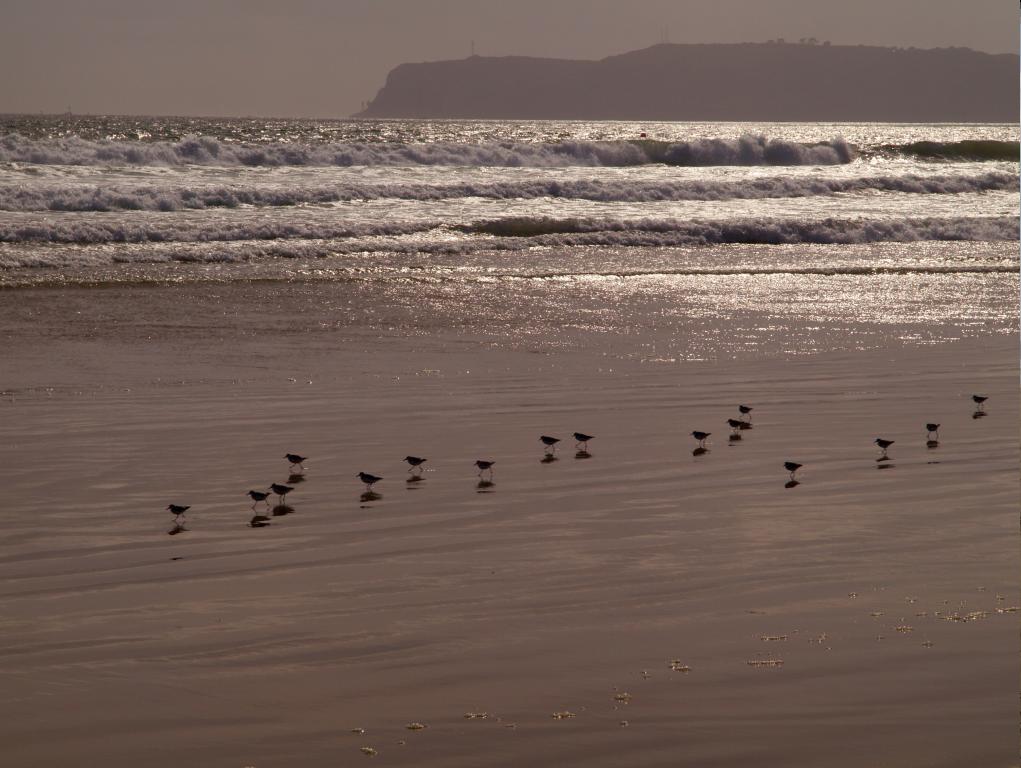
San Diego County health officials closed Coronado's entire shoreline through North Beach on Tuesday, Sept. 8, because sewage from the Tijuana River contaminated the water.
The closure marks a significant escalation. As recently as late August, only Silver Strand was fully closed while the Coronado shoreline carried a less restrictive bacterial advisory, according to CBS 8. The entire Coronado coast is now off-limits to swimmers and surfers.
The beach will stay closed until testing and field observations confirm the water is safe for contact, according to the San Diego County Department of Environmental Health and Quality. No reopening date has been set.
The county warned that contaminated water could cause illness and is unsafe for swimming, KPBS reported. Children, older adults and people with compromised immune systems face greater risks from contact with sewage-polluted water, county officials have said.
Tijuana Slough, Imperial Beach and Silver Strand shorelines also remain closed due to sewage levels, according to the San Diego Union-Tribune. Advisories are in place at La Jolla Children's Pool, Tidelands and Tourmaline Surf Park, where bacteria levels exceed state standards.
Testing dispute continues
The closure comes amid an ongoing dispute between Coronado and the county over water testing methods. At the Aug. 18 Coronado City Council meeting, Mayor John Duncan challenged the county's use of ddPCR (droplet digital Polymerase Chain Reaction), a DNA-based testing protocol that detects bacterial DNA from both living and dead cells. The older Enterolert method tests only live bacteria.
"If your premise is that (Enterolert) is faulty, that means the EPA is jeopardizing everybody's health, every other ocean in the entire country – except for Coronado's and Imperial Beach's and San Diego County," Duncan said at the August meeting, according to The Coronado News.
County Public Health Officer Dr. Sayone Thihalolipavan defended the method as EPA-validated at that same meeting. San Diego County was the first municipality in the nation to adopt ddPCR for beach testing.
The state-set safety threshold is 1,413 enterococci gene copies per 100 milliliters. The county does not have authority to change it.
Long-term fix in the works
The San Diego County Board of Supervisors voted 4-1 on Wednesday, Sept. 2, to approve the Tijuana River Capture and Cleanup Initiative, a three-phase plan to build a sewage treatment system on the U.S. side of the border, the Los Angeles Times reported. The board allocated $1.8 million for the first phase.
A proposed half-cent county sales tax on the November ballot could generate $360 million per year, with about $80 million earmarked annually for Tijuana River improvements.
Residents can check beach status at sdbeachinfo.com or call the county's 24-hour hotline at 619-338-2073.